China Contract Manufacturing (OEM) Agreements: Key Clauses for Foreign Brands
An OEM contract in China is not a purchase order. It is the only thing standing between your brand and a factory that keeps your molds, your designs and your trademark. These are the clauses that decide who owns what when the relationship ends.
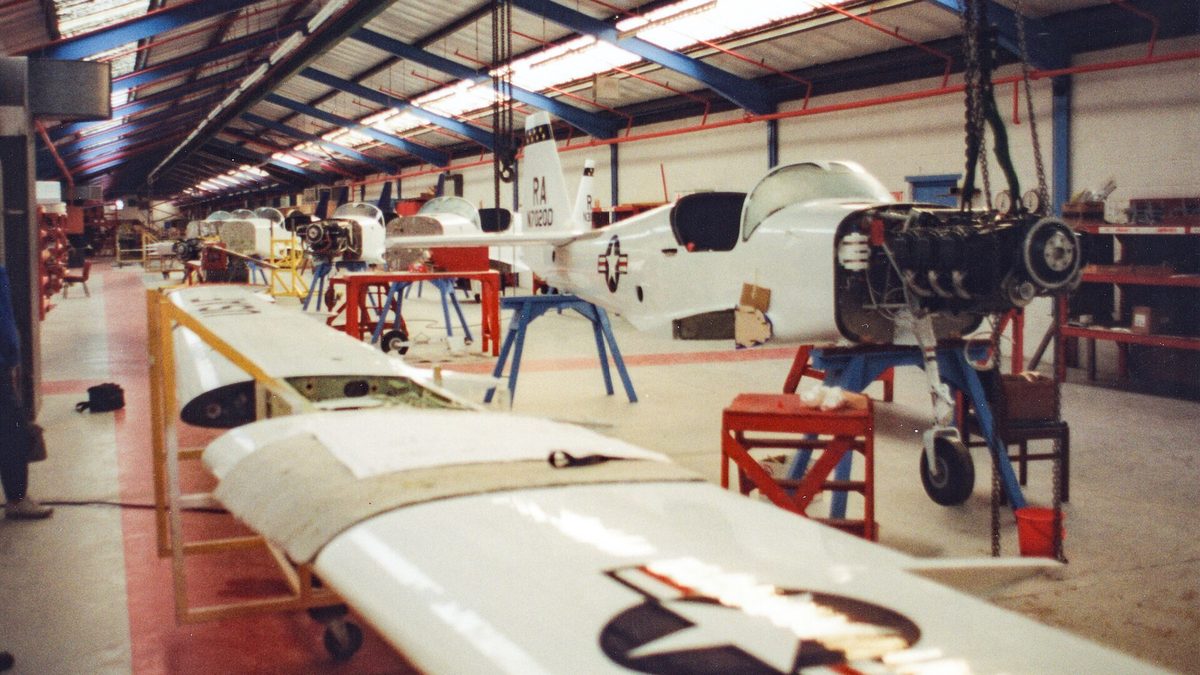
Foreign brands manufacture in China for the same reason they worry about it: capability at scale. A Chinese factory can usually make your product at a price and volume few other markets match — but the relationship is only as safe as the contract that governs it. In an OEM (original equipment manufacturing) arrangement you are not buying goods off a shelf; you are handing a factory your specifications, your tooling, your brand marks and, in practice, a share of your supply chain. Chinese law gives you strong tools to protect all of it, but only if the agreement says so in writing.
OEM vs ODM: who owns the design and the IP
In OEM manufacturing, the foreign brand owns the design. You supply the specifications, drawings, formulas or source files, and the Chinese manufacturer produces to your standard under your trademark. The design and the underlying intellectual property remain yours, and the factory is a maker, not an owner. In ODM (original design manufacturing), by contrast, the factory proposes the design and you select from its catalogue or its engineering output.
That difference is not cosmetic — it decides who owns the IP. Under the PRC Copyright Law, the factory that creates a design generally owns the copyright in it unless ownership is assigned in writing. A brand that has "always used this design" but never obtained an assignment can discover, when it tries to move production or stop a copycat, that the factory holds the very rights it thought it owned. For OEM work, confirm in the contract that the brand owns the specifications and all IP in them; for ODM work, obtain an express written assignment of the design IP — including drawings, the molds based on them and any improvements — before or at first payment.
The legal framework: the Civil Code and the CISG
Three sources govern most China OEM relationships. First, the PRC Civil Code. Article 470 lists the essential contents of a contract — parties, subject matter, quantity, quality, price, time and place of performance, liability for breach and dispute resolution — and doubles as a drafting checklist. Article 577 provides that a party that fails to perform, or performs in a manner inconsistent with the agreement, bears liability for breach by continuing performance, taking remedial measures or compensating losses. Article 585 permits the parties to agree liquidated damages or a formula for calculating them; a court may adjust the amount if it is found to be "excessively higher" than the loss actually caused.
On liquidated damages, be calibrated rather than punitive. Under the Supreme People's Court's 2023 judicial interpretation on contract disputes (法释〔2023〕13号), liquidated damages that exceed the actual loss by more than 30% are commonly treated as a reference point for "excessively high" and reduced accordingly. A clause demanding ten times the plausible loss is unlikely to survive a challenge, so size the figure to realistic exposure.
Second, the CISG. China ratified the United Nations Convention on Contracts for the International Sale of Goods, which took effect for China on 1 January 1988. For a cross-border sale of goods between a foreign buyer and a Chinese seller, the CISG applies by default unless the parties validly exclude it under Article 6. That default is why a well-drafted OEM contract states expressly which regime governs — the CISG, PRC domestic law, or PRC law with the CISG excluded — rather than leaving the answer to a conflicts analysis.
The clauses that carry the deal
Product specification and GB standards
Define the product with more than a brand name. Attach a full specification — materials, dimensions, tolerances, performance, packaging — and reference the applicable Chinese standards. Mandatory national standards (GB, 强制性国家标准) are legally binding, while recommended standards (GB/T) become binding once the contract incorporates them. Specify which standards apply, the version, the testing method, and the acceptance or rejection criteria on inspection, so a "quality dispute" is settled against a written standard instead of an argument.
IP and trademark ownership
State that the brand owns the design, drawings, tooling and all IP created in the course of performance, and that the manufacturer assigns any rights it might acquire. Trademarks are territorial: a home-market registration gives you no rights in China. File the brand's marks in China with the CNIPA before production starts, and record the manufacturer as a licensed user only — never as owner. Because China is a first-to-file system, a factory that registers your mark first can hold your own brand hostage.
Mold and tooling ownership
Molds are the classic flashpoint. The factory typically orders the mold and lists it as its own asset. Provide that all molds, tooling and fixtures paid for by the brand are owned by the brand, that they may be used only for the brand's orders, that they must be maintained and insured, and that they will be released or returned on termination or on payment of any agreed balance. Without this clause, a brand that wants to change factories may find it cannot take its tooling with it.
MOQ, delivery and Incoterms
Define minimum order quantities, lead times and the delivery term using a named Incoterms rule — for example FOB Shanghai or FCA factory — with the specific place and the Incoterms version stated. The term decides the point at which risk of loss or damage passes, and which party clears export and bears freight and insurance, so choose it deliberately rather than by habit.
Payment
Structure payment around verifiable milestones — a deposit, payment against pro forma invoice or bill of lading, and a retention — rather than large upfront transfers. Add that payment does not transfer ownership of tooling or IP, and keep a right to withhold for non-conforming goods.
Governing law and CIETAC arbitration
Choose PRC law as the governing law for manufacture performed in China, and refer disputes to arbitration administered by CIETAC (the China International Economic and Trade Arbitration Commission), with the seat in a specified city, the language stated, and the number of arbitrators fixed. Arbitration beats local-court litigation for a foreign party because the resulting award is built to travel.
Making the award enforceable: the New York Convention
An arbitration clause is only as good as the award you can collect. China acceded to the New York Convention on the Recognition and Enforcement of Foreign Arbitral Awards, in force for China since 22 April 1987, so a CIETAC award is enforceable in China and in the other Convention states. For that machinery to work, the arbitration agreement must be in writing, clearly drafted, and signed by someone authorized to bind the manufacturer. A handshake, or a clause buried in an unread attachment, is where enforceability arguments begin.
Treat the OEM contract as an asset register, not a purchase order. List every item the brand owns — specifications, drawings, molds, trademark, improvements — in a schedule, and state who owns each and what happens to it on expiry or termination. Before you sign, map the import-side obligations too: see China Import Contracts: Key Clauses to Protect Your Deal for the terms that decide who pays when a shipment goes wrong.
An OEM agreement that is silent is not neutral. In Chinese law, silence usually vests rights in the party that created or holds the asset — often the factory. The clauses above — specification and standards, IP and trademark ownership, tooling, MOQ and Incoterms, payment, and CIETAC arbitration — are the difference between a factory that works for you and one that works you. Figures and thresholds in this article reflect the law as publicly reported; confirm the current versions and any new judicial interpretations with official sources or counsel before relying on them.
Related articles

China Import Contracts: Key Clauses to Protect Your Deal
A China import contract is only as good as its clauses. Title and risk transfer, inspection, liquidated damages, governing law and force majeure — the terms that decide who pays when a shipment goes wrong.

Trademark Registration in China: A Guide for Foreign Brands
China is first-to-file. How foreign brands register a trademark with CNIPA, the Madrid route, timelines and the 2026 Trademark Law revision — explained.