Setting Up a Regional Headquarters in China: Incentives, Structures and Compliance for Multinationals
A China regional headquarters is a designation, not a new company type — and the real substance is in municipal incentives. How Shanghai and Beijing define and reward regional HQs, and what a multinational must actually qualify for.
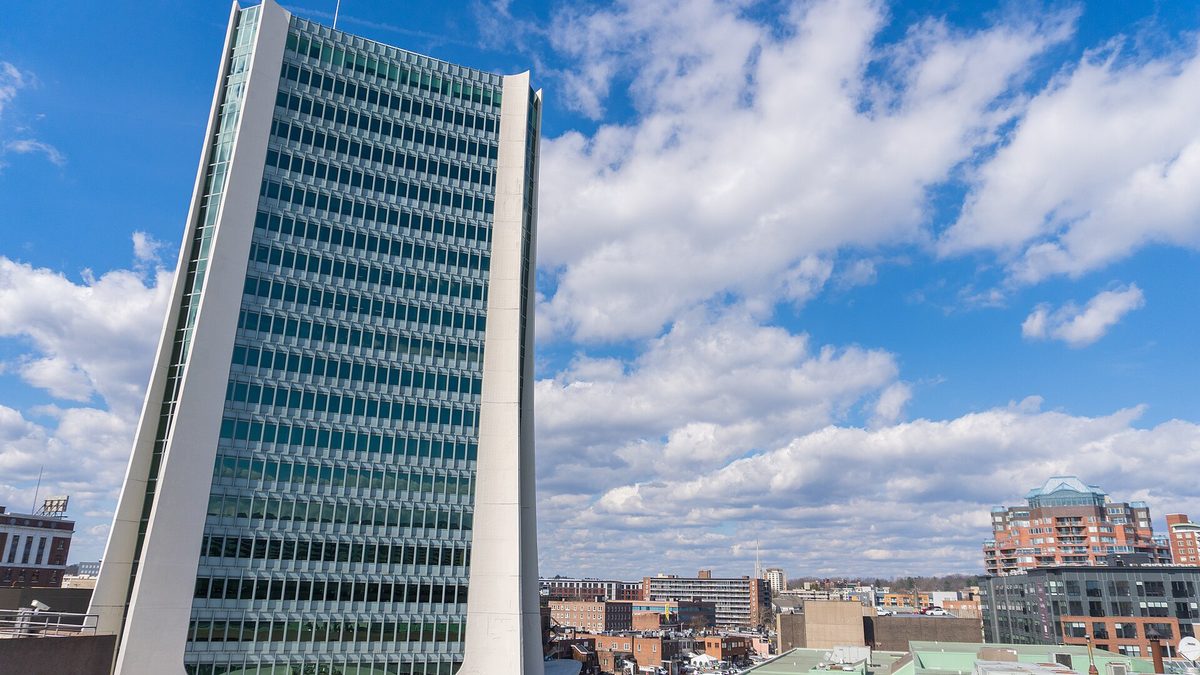
A multinational consolidating its China and Asia-Pacific functions often asks whether it should "set up a regional headquarters in China." The first thing to understand is that a regional headquarters is not a new type of company. It is a designation granted to an existing foreign-invested enterprise — usually a WFOE — by the local commerce authority, and the value of the designation lives almost entirely in the municipal incentives attached to it.
There is no single national "regional HQ" statute
China has no unified central measure called the "Regional Headquarters Administrative Measures." The national policy basis is dispersed: State Council Document No. 11 of 2023 (Opinions on Further Optimising the Foreign Investment Environment) encourages qualified foreign investors to set up investment companies and regional headquarters, and an earlier State Council Document No. 39 of 2017 did the same. The older MOFCOM Order No. 22 of 2004 (Provisions on the Establishment of Investment Companies by Foreign Investors) contains a regional-headquarters recognition clause — with a paid-in registered capital of USD 100 million (or USD 50 million plus substantial invested-enterprise assets and profits) among the thresholds — but its current effective status and its interface with the post-2020 Foreign Investment Law should be confirmed against MOFCOM's latest regulatory clean-up. In practice, the recognition that matters is municipal.
Shanghai: the most developed regime
Shanghai recognises regional headquarters under Hufu Gui No. 17 of 2022 (valid through 31 October 2027). For a regional headquarters, the typical conditions are: an independent-legal-person foreign-invested enterprise; the overseas parent directly or indirectly holds at least 50%; the parent has total assets of at least USD 200 million; registered capital of at least USD 2 million; and no serious credit violations in the past three years. A "headquarters-type institution" has lower thresholds (parent assets of USD 100 million, registered capital of USD 1 million), and Shanghai also recognises a "business-division headquarters" for units that anchor a specific division's Asia business.
The incentives are where the substance is. Hufuban Gui No. 1 of 2025 (effective 1 March 2025) offers up to RMB 3 million for an upgrade to an Asia-Pacific headquarters, up to RMB 10 million for a business-division global headquarters, and RMB 3 million per newly added core function, plus supporting facilities in treasury management, cross-border cash pooling, AEO status, cross-border data flows and entry-exit convenience.
Beijing: lighter thresholds, faster process
Beijing's regime is in Jingzhengfa No. 8 of 2025 (effective 11 July 2025), which replaced the 2021 measures. A multinational regional headquarters in Beijing typically requires: the overseas parent directly or indirectly holds at least 50%; parent total assets of at least USD 100 million; registered capital in Beijing of at least USD 1 million; and one year of continuous operation in Beijing. Recognition is handled by the Beijing Municipal Commerce Bureau, with a commitment-based process that can complete in about three working days, and districts add their own capital awards (for example, Chaoyang District has offered up to RMB 30 million for paid-in registered capital of USD 100 million or more, paid in instalments).
Designation, not approval
The critical compliance point is that a regional headquarters is not a separately licensed entity and carries no independent pre-approval under the post-2020 negative-list plus information-reporting regime. A standard WFOE is established through the ordinary registration and reporting process; the regional-headquarters recognition is a concurrent or subsequent designation, not an entry approval. The one structural exception is the foreign-invested investment company (a holding/investment vehicle), which has its own historical rules and is the form most municipal policies actively encourage for genuine headquarters structures.
How to decide
- Decide whether the function is real — a regional HQ designation is worth pursuing only if you are actually consolidating treasury, management, R&D or shared services.
- Compare the city thresholds against your parent's balance sheet and your planned registered capital, since a designation you cannot meet is dead weight.
- Map the incentives to the functions you will actually locate, and confirm the award's conditions with the district before committing.
- Keep the structure clean: a standard WFOE for the designation, and consider the investment-company form only where the holding function justifies it.
The designation is a negotiation with the city, not just a filing: the published thresholds are the floor, and the incentives are usually tied to the functions and headcount you commit to put in place. Get the incentive conditions in writing before you announce the structure. This article is general information and not legal advice.
A China regional headquarters is best understood as a policy label bolted onto an ordinary foreign-invested company. The label unlocks real money and real conveniences, but only if the entity beneath it actually performs the headquarters functions the city is paying for.
Related articles

China Medical Device Registration (NMPA): Class I, II, III and Clinical Requirements for Foreign Manufacturers
Selling a medical device into China means getting it registered or filed with the NMPA, not just clearing customs. How the Class I, II and III system works, what a foreign manufacturer's Chinese agent must do, and the clinical-evaluation and quality-system requirements that decide whether you can sell.
China's Carbon Market and ETS: Compliance for Foreign-Invested Manufacturers
China's national emissions trading scheme started with power and is widening to steel, cement and aluminium — and it covers a factory by its emissions, not by its ownership. How the ETS works, who is caught, and what a foreign-invested manufacturer must do to monitor, report, verify and surrender allowances.

Appointing a Distributor or Sales Agent in China: Key Contract Clauses for Foreign Brands
A foreign brand entering China without a full subsidiary usually signs a distributor or sales-agent agreement — and the clauses you leave out are the ones that decide the exit. Territory, exclusivity, pricing, IP, termination compensation and dispute resolution: what to fix in writing before you sign.